
OUR BLOG
The point of using Lorem Ipsum is that it has a more-or-less normal distribution of letters, as opposed to using 'Content here, content here', making it look like readable English
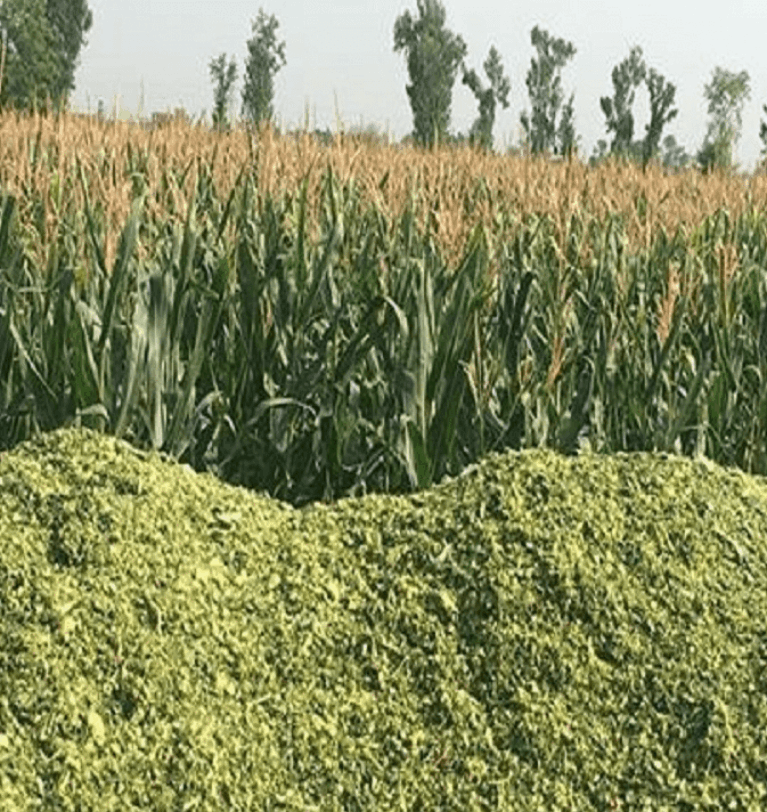
What is Corn Silage- Cultivation to Feeding for Farmers
Overview Corn silage is an important animal feed made by forming corn plants, including its leaves, stalks, cobs, and grains. Farmers like to use it due to its nutrients and…
Read more
Investment Conference Beijing 2025 – Saremco International Leads Pakistan’s Agricultural Delegation
On September 4, 2025, the Pakistan Embassy in Beijing, in collaboration with its consulates throughout China, will host the second Pakistan Conference in the Chinese capital. The event will be…
Read moreGET IN TOUCH
Latin words, combined with a handful of model sentence structures, to generate Lorem Ipsum which looks reasonable.
Overview
Many people often think maize silage and corn silage are different, but they’re the same feed—just known by different names depending on the region. People in North America usually call it corn, but in Europe and other places, it’s known as maize.
“Corn” is commonly used in North America, while “maize” is the preferred term in Europe and other parts of the world. Both names describe the entire corn plant, which is harvested at the right stage, then chopped and fermented to feed livestock. “This type of silage is full of energy and easy-to-digest Fiber, making it a key part of diets for both dairy and beef cattle.
One Silage, Two Labels
The word ‘corn’ comes from the English language and has been used in North America for many years to refer to the main cereal crop, while the rest of the world calls it ‘maize’. The word ‘maize’ comes from Spanish, which originally came from the Taino language spoken in the Caribbean. Farmers in the US and Canada usually call it ‘corn silage but in South Africa, UK or Germany, the same feedstuff is called ‘maize silage’. The difference is only in the name. Whether you call it corn or maize, the way it’s harvested, fermented, and its nutrition are all the same.”
Shared Production Process
Both maize silage and corn silage begin by harvesting the whole plant—stalks, kernels, and leaves—at the right stage of growth. “The crop is then cut into small, even pieces and packed tightly into a silo, bunker, or wrapped bale. In airtight conditions, natural bacteria turn the sugars into lactic acid, which helps preserve the forage and lowers the pH.
The result is a moist, energy-rich feed that’s very important for dairy and beef cattle, especially when fresh grass isn’t available.
Nutritional Composition
Both maize and corn silage are full of nutrients. The kernels provide energy-rich sugars, and the stalks and leaves give useful Fiber, helping animals grow quickly and produce more milk. Nutrient levels can change based on things like harvest moisture, plant variety, how tightly it’s packed, and how short it’s chopped—but these factors affect both maize and corn silage in the same way.
Language and Regional Context
Here we need to understand the worth why name matters. In the USA, word corn represents cereals like oats, barley, wheat- specially in historical contexts. Corn is considered as a central identity, as it is now dominant grain of USA. In research papers, global trade, and plant breeding, the word ‘maize’ is often used because it’s clearer and more widely understood around the world. However, local farm language is corn.
Regional Nuances in Farming Practice
The term or terminology indicates regional language agricultural style. In wet climates, farmers who grow ‘maize silage’ often also use legume silages or cut grass several times a year. There’s no difference in the feed itself, but in the equipment used, crop rotation, and local diets. The feed stays the same—it’s just called by different names.
In contrast, areas where “corn silage” is prevalent—such as the Midwest U.S. and parts of South America—often operate large-scale, mechanized corn silage systems integrated into high-output dairy operations. The difference lies not in the feed itself, but in cropping rotations, equipment, and local diets. Still, the feed remains the same—just called differently.
Solving Misconceptions
Maize silage is also referred as more advanced or research based- however, corn silage is more rustic. In fact, both are important components of modern beef and dairy systems worldwide. Machine manufacturers, breeders, and nutritionists use both terms. They are mutually dependent on fermentation control, full ensiling techniques, and quality hybrids.
Farmer Voices
Just imagine a farmer in USA – “we call it as corn silage, but we focus on everything- when to cut or chop, how to pack and feed it. It is same as a farmer calling it ‘maize silage’ in Holland or Kenya. Maize growers in Kenya and Netherlands.
People might use different words for it, but silage is still a key part of successful ruminant farming around the world—and that difference only affects what you call it, not how it’s used.
Overview
Corn silage is an important animal feed made by forming corn plants, including its leaves, stalks, cobs, and grains. Farmers like to use it due to its nutrients and rich in energy. It provides a mixture of digestible content and Fiber required for milk production, growth, and overall health.
Instead of drying like other fodder, corn silage is stored by packing chopped corn tightly in airtight conditions. It keeps the feed fresh and full of nutrients for a long time. We should pay thanks to this preservation method that farmers can depend on corn silage to supply animals with consistent and high-quality feed throughout the year, even when it is short. It is popular not only for its nutritional value, but it also delivers and supports lower feeding costs, high yield per acre, and sustainable farming. Corn silage is now a major component of livestock feeding in both dairy and beef industries around the globe.
In this post, we will explain how corn silage is produced and how farmers can achieve better results from their crops, resulting in healthier and more productive animals. Corn silage is now established as a major element in modern livestock feeding practice worldwide.
1. Improving Corn Silage Yield per Acre- Key Factors
For improved corn silage yield per acre, farmers should focus on timely practice, the right use of resources, and good crop management. There are various factors of corn silage.
Seed Selection
- Choose High-Yield Hybrids
- Disease & Pest Resistance
- Adapted to Local Climate
- Good Digestibility
- Drought Tolerance
- Balanced Maturity
- Tested Performance
Soil Fertility
- Soil Testing
- Organic Matter
- pH Management
- Timely Fertilizer Application
- Avoid Over-Fertilization
- Crop Rotation
Irrigation Management
- Adequate Water Supply
- Soil Moisture Monitoring
- Efficient Irrigation Methods
- Timely Irrigation
- Avoid Water Stress
- Prevent Waterlogging
- Irrigation Scheduling Tools
- Conserve Water
Weed, Pest & Disease Control
- Early Weed Management
- Timely Herbicide Use
- Mechanical Control
- Integrated Pest Management (IPM)
- Resistant Varieties
- Crop Rotation
- Regular Field Monitoring
- Safe Pesticide Use
Crop Rotation
- Breaks Pest & Disease Cycles
- Improves Soil Fertility
- Better Weed Control
- Increases Yield Potential
- Reduces Dependence on Chemical
Harvest Timing
- Optimal Stage
- Moisture Content – Aim for 60–70% plant moisture
- Avoid Early Harvest
- Avoid Late Harvest
- Field Monitoring
- Uniformity Matters
- Weather Considerations
Chopping & Storage
- Chop Length (around 1–2 cm
- Sharp Blades
- Airtight Sealing
- Speed of filling
- Storage Type –storage like (bunker, tower silo, or wrapped bales)
- Moisture Balance – Ensure ideal moisture (60–70%).
- Regular Monitoring.
Technology
- Adopt precision farming
- Mechanized planting and harvesting.
Corn Silage HS Code, Documentation, and Customs Guidelines
Corn silage is exported all over the world like any other agricultural product; corn silage is exported across borders under a designated HS (Harmonized System) Code, which categorizes goods according to the customs department. Using the correct code makes the export process more straightforward. HS code is also required for the preparation of key export documents like packing list, airways or B/L lading, certificate of origin, and invoice.
In some cases, a phytosanitary certificate is important to check that the shipment fulfills safety standards. Every country has different rules and regulations. We need to follow some tips to help reduce rejection chances and keep shipments as per the laws.
- HS Code Classification.
- Accurate Coding
- Essential Documents
- Phytosanitary Certificate
- Customs Regulations
- Trade Compliance
- Country-Specific Guidelines
- Transparency & Accuracy
Advantages of Dry corn silage
Dry corn silage is stored at a lower moisture level as compared to other common silages, making it more stable and easier to preserve for a long time. Farmers use silos, bunkers, and wrapped bales to save it from spoilage or air exposure. The storage method is key to improved feed quality and lowers the risk of mold development. An extended shelf life is also main or major advantage of dry corn silage.
One big benefit of dry corn silage is that it lasts longer, so farmers can have a steady feed supply even when fresh crops are not available. It is also cheaper and easier to move than high-moisture silage. Dry corn silage has more starch and energy because it loses less during fermentation, so it gives animals a nutritious and energy-rich feed. It is easily mixed with other feeds, which allows farmers to prepare balanced diets for dairy and beef cattle.
- Longer Storage Life
- Easier Handling
- Consistent Feed Quality
- Reduced Fermentation Losses
- Flexibility in Feeding
- Lower Risk of Silage Effluent
- Suitable for Long-Distance Transport
- Supports Balanced Diets
Economic Impact of Corn Silage
The economic impact of corn silage is very important for both animals and farmers. It will reduce feed costs by giving huge amount of energy per acre that lowers the costly feed items, improves feed efficiency, and weight gain. It is good for both farmers and producers. For dairy producer, it produces milk at lower cost. Corn silage plays an important role in raising farm income and ensuring sustainability in the dairy animal sector.
Strong Revenue Potential per Acre
- Significant earnings.
- At standard moisture levels (around 65%)
- Market value is 8 to 10 times the price of a bushel of grain.
Cost Efficiency and Competitive Feed Value
- Total cost approximately $960 per acre
- Cost averages $59 per ton
Enhanced Dairy Performance and Profitability
- With 40% of forage needs met by processed silage
- Farms saw improved milk yields that translated to around $50 more profit / cow annually
Feed Value and Inclusion Rates
- Corn silage is highly digestible and energy-rich and widely used in livestock feed.
- it became an economical energy source
From Field to Silo- the silage journey
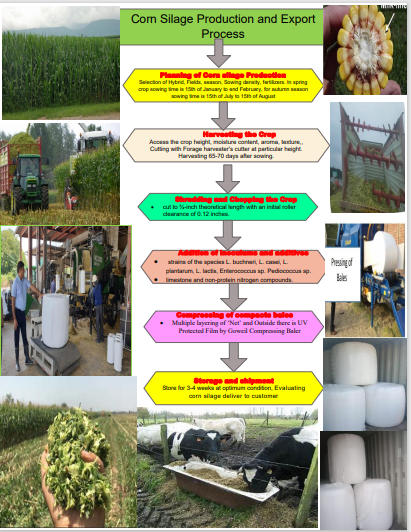
Corn silage production begins on farms, where management practices directly affect the average yield, and careful planning is required. Farmers begin by selecting high-yielding hybrid seeds perfect for the required local conditions, as the right plays an important role in crop performance. Timely pest management, weed control, and effective irrigation are essential to achieve the target.
- Crop Establishment
- Field Management
- Growth Monitoring
- Harvest Timing
- Chopping Process
- Transportation
- Silo Filling
- Sealing & Fermentation
- Quality Control
- Ready for Feeding
The Corn Silage Making Process
The first step in silage preparation is harvesting corn when kernels show the half to two-thirds milk line stage, which is considered ideal. At this stage, corn silage has a perfect combination of starch, moisture, and Fiber- making it an ideal feed. After the chopping procedure, the material is shifted to another location, like wrapped bales, bunkers, or silos. Proper compaction is done to squeeze out air and seal the silage tightly. After 3-4 months, silage becomes stable and ready to feed. If all the points are fulfilled, then this process will lock it in nutrients and produce rich-energy feed that is stored for some months.
- Harvesting at the Right Stage
- Chopping into Small Pieces
- Quick Transport to Storage
- Proper Packing & Compaction
- Covering & Sealing
- Fermentation Process
- Storage & Monitoring
How to Store Corn Silage to Preserve Nutritional Value?
If you want to keep corn silage fresh, rich in nutrients, and safe, then the key is proper storage. After harvest, it must be backpacked tightly in wrapped bales, bunkers, and silos. Oxygen can damage the corn silage and covers the silage in airtight wraps. It allows natural fermentation and helps to maintain anaerobic condition. Farmers also use tires or weights to prevent leakage and secure the cover. Corn silage remains palatable and beneficial after these steps.
- Pack Tightly by compressing
- Use Airtight Storage
- Cover Properly
- Apply Weights
- Monitor Regularly
- Control Moisture
- Maintain Clean Storage Areas
- Feed-Out Management
Corn Silage Bales: An Efficient Feed Storage Solution
In a modern feeding system, corn silage plays an important role. It is a more efficient and practical way to store and transport high-quality yield. Bales are used to prevent oxygen exposure. It ensures that cattle receive high quality feed. These bales are important for farmers. It reduces extend shelf life, reduces spoilage, and
provides convenient way to handle this crop storage. Corn silage bales provide improved milk production and use proper strategies.
- Efficient Storage
- Reduced Oxygen Exposure
- Extended Shelf Life
- Portability
- Space Saving
- Convenient Handling
- Consistent Feed Quality
- Improved Milk Production
- Cost-Effective
- Flexible Option
Corn silage fermentation process
- There are some key steps that turn corn into a nutritious and stable feed. Once oxygen is removed by packing it in tight bales, and natural bacteria break down the sugar into lactic acid. This lactic acid decreases the pH values (nutrients & energy) and creates a good environment. A complete fermentation process takes some weeks and depends on some factors such as good compaction, proper moisture content, and protection from air.
-
- Chopped corn storage
- Oxygen removal
- Bacterial activity
- pH reduction
- Moisture balance
- Compaction importance
- Fermentation time
- Nutrient preservation
- Feed stability
- Consistent quality
Best Practices for Using Corn Silage in Dairy Cow Diets
Corn silage is one of the most important feeds for cows, however, to get best outputs. Farmers must take wise decision like they should balance corn silage and protein sources as complete diet that supports animal health and milk production. The silage should always be well-fermented, fresh, and free from mold or spoilage, as poor-quality feed can reduce intake and harm cow performance. Regular testing of silage for nutrients like Fiber, starch, and protein helps in adjusting rations as per cows’ requirements.
- Balance corn silage with other forages and protein sources for a complete diet.
- High quality silage: well-fermented, fresh, and free from mold or spoilage.
- Test silage regularly for nutrients like starch, Fiber, and protein to adjust rations.
- Feed consistent amounts daily (Same time) to maintain rumen health.
- Prevent digestive issues by monitoring cow intake
- Use proper storage and removal methods to avoid spoilage, heating or nutrient loss.
- Contaminated silage to protect cow health.
- Match rations to cow production stages (dry, lactating, or heifers).
- Monitor milk yield and cow health to evaluate diet effectiveness.
- Training on correct feeding practices and ration handling.
From Field to Feeder: Using Corn Silage for Goats
Corn silage is an important feed for goats. It provides a good balance of energy and Fiber, supporting both healthy growth and milk yield. Goats are more selective and sensitive eaters. Farmers create balance meal for goats that fulfill the needs of goats. Farmers can mix silage with legumes, hay, or focus to create a balanced ratio. Corn silage is cost-effective or affordable feed for dairy animals’ availability throughout the year.
- Provides a good balance of energy and fiber for growth and milk production.
- Ensures a consistent feed supply throughout the year, even in dry seasons.
- Supports digestion when fed in proper amounts alongside other feeds.
- Helps reduce feed costs compared to concentrates.
- Improves farm productivity by maintaining animal health and performance.
- Can be stored for long periods without losing nutrition if kept airtight.
- Offers a reliable alternative when green fodder or pastures are scarce.
- Must be free from mold and spoilage to keep goats safe and healthy.
Nutritional Benefits & feeding strategies
Corn silage provides important nutritional advantages for dairy cattle and other animals. Its nutrients like Fiber, starch and energy are perfect for dairy animals. Farmers can mix it with other meal products like alfalfa or soybean meal to makes a perfect healthy diet. For the best result, it is important to provide consistent feed best formula and monitor the performance of cattle.
Nutritional Benefits of Corn Silage
- Provides high energy due to starch content.
- Provides digestible Fiber for better rumen function.
- Helps higher milk yield and fat content in dairy cows.
- Promotes steady weight gain in beef cattle.
- No dependency on expensive concentrate feeds.
- Throughout the year, feed availability when stored properly.
Feeding Strategies for Cattle
- Combine silage with protein-rich ingredients (e.g., soybean meal, alfalfa).
- Balance with minerals and vitamins
- Maintain consistent feeding schedules
- Monitor cattle performance
- Adjust silage levels as per production stage, age, and breed.
- Use proper storage and fermentation practices to preserve quality.
On September 4, 2025, the Pakistan Embassy in Beijing, in collaboration with its consulates throughout China, will host the second Pakistan Conference in the Chinese capital. The event will be opened by the Prime Minister of Pakistan, who will also deliver an address, with senior ministers and top officials expected to take part.
He will officially launch the second phase of the China-Pakistan Economic Corridor (CPEC-II), a stage designed to strengthen technology cooperation, promote industrial growth, and advance sustainable economic projects after a gap of nearly five years.
According to Planning Minister Ahsan Iqbal, who is overseeing Pakistan’s preparations, both countries are determined to set clear goals and ensure practical, result-oriented outcomes.
However, Saremco International will be participating as part of the Pakistani delegation, representing Pakistan’s agricultural and business sectors. A 3-member team from Saremco Agri Commodities, including CEO Muhammad Arif, Jamshed Yousaf, and Junaid, is visiting. The opening session will include a video presentation on incentives available for Chinese investors. After this, companies from both countries will take part in sector-specific B2B meetings.
As part of this renewed partnership, Saremco International, one of Pakistan’s leading agricultural exporters, will represent the private sector in advancing agri-based trade and food security solutions under CPEC-II. The company, already known for leading exports to the Middle East, is now ready to grow Pakistan’s agricultural presence in the Chinese market.
The government has highlighted the importance of diversifying exports, strengthening industry agreements, and developing skilled resources, while giving priority to opportunities in mining, agriculture, artificial intelligence, and special economic zones. Since China imports goods worth more than $2 trillion/year. Pakistan aims to secure a $30 to 50 billion share of this trade by leveraging CPEC’s second stage,
The purpose of Saremco International is to contribute to strengthening Pakistan’s economy. With a focus on agriculture and related industries, the company aims to showcase high-quality products that meet international standards, while building long-term partnerships with Chinese businesses. Saremco International is the first company to be selected for producing food security products in the Middle East and introducing a heavy compression machine.
By participating in trade conferences, engaging in B2B meetings, and introducing the latest technologies, the company seeks to expand market access, attract investment, and create new growth opportunities.
Please visit the Pakistan Embassy Beijing’s website for details regarding the B2B Conference, especially hotel bookings.
Two hotel options are available with special corporate rates:
- China World Hotel (conference venue – highly recommended)
- Kempinski Hotel
Booking links for both hotels are provided on the website.
Rhodes grass hay (Chloris gayana) is one of the commonly used forages and is valued as a flexible and nutritious feed choice. Raising farm animals, especially beef and dairy cattle, depends a lot on having good-quality feed. Because it grows well in almost all climates, produces forage, it is widely used for feeding cattle around the world.
In this post, we’ll highlight the nutritional benefits of Rhodes grass hay, its role in cattle performance, and effective feeding ways to maximize its value for both beef and dairy cattle.
Understanding Rhodes Grass Hay
Rhodes grass hay is a useful animal feed made from the Rhodes grass plant, a tropical grass that grows quickly and is tough. It grows well in many types of soil and climates, so farmers can rely on it in both dry and wet areas. When it is cut and dried properly, the grass keeps most of its nutrients and provides cattle with a good source of energy and Fiber. This mixture of good nutrition, easy growth, and simple storage makes it an important feed for both livestock farms. Its characteristics are mentioned:
1-High adaptability.
2-Moderate crude protein content.
3-Good fiber digestibility.
4-Palatable and readily accepted by cattle.
Nutritional Profile of Rhodes Grass Hay
The nutritional value of Rhodes grass hay depends on things like the stage of harvest, soil health, and how it is stored. On average, it contains
Crude Protein (CP) & Metabolize energy
1-CP level ranges from 7% to 12%.
2- Early-cut hay has higher protein.
3-Growth, milk production, and muscle development in cattle.
4- Needs of lactating cows or fast-growing beef cattle.
5- 7-9 MJ/kg DM
i-Neutral Detergent Fiber (NDF)
1- NDF makes up 60% to 70% of Rhodes grass hay.
2-Measures the cell wall content (hemicellulose, cellulose, lignin)
3- Provides bulk and structure in the diet
4- Higher NDF can reduce feed intake
5-Balanced NDF levels
6- Contains calcium, phosphorus, magnesium, and trace elements, though supplementation may be necessary.
Nutritional Benefits for Beef Cattle
Beef cattle need diets that support steady growth, muscle development, and good meat quality. Rhodes grass hay includes:
i-Energy Supply for Growth
1-Energy is used for muscle development and fat deposition.
2-Works best when balanced with concentrates or high-energy feeds.
ii-Rumen Health
1-Stimulates chewing and saliva production.
2-Prevents digestive problems like acidosis and bloating.
iii-Improved Weight Gain
iv-Adaptability in Feeding Systems
Nutritional Benefits for Dairy Cattle
Dairy cattle have higher nutritional demands due to milk production. Rhodes grass hay plays an important role in meeting these requirements:
1-Supports Milk Production
2-Provides Fiber that keeps the rumen healthy
3-Sustains milk yield.
i-Improves Milk Fat
1-Long Fiber stimulates cud chewing
2-Helps maintain quality milk
ii-Complements Protein Sources
1-Works well with legumes
2-protein-rich feeds to meet high nutritional needs.
iii-Palatability
1-Cows find it tasty
2-Encouraging steady feed intake.
iv-Digestive Health
1-Balanced fiber helps maintain rumen pH
2-Prevents digestive problems.
Tips for Maximizing Value from Rhodes Grass Hay
i-Harvest at the right stage
1-Get higher protein
2-better digestibility.
ii-Proper drying
1-Dry the hay under sunlight for 2–3 days, then store in a cool, dry
2-Well-ventilated place to avoid mold.
iii-Chop before feeding
1-Cutting hay into smaller pieces reduces wastage
2-Improves intake.
iv-Supplement wisely
1-Add protein- or energy-rich feeds to balance nutrition.
v-Use in balanced rations
1-Mix with concentrates and minerals for dairy cows
2-fattening cattle.
vi-Regular feed testing
1-Check crude protein, fiber,
2-Energy levels to guide supplementation needs.
vii-Monitor cattle performance
1-Adjust feed based on weight gain, milk yield
2-Watch for signs of nutrient deficiencies
Challenges and Limitations
While Rhodes grass hay has many advantages, it has limitations:
i-Moderate Protein Content
1-Meet the needs of lactating dairy cows or fast-growing beef cattle.
ii-Variable Quality
1-Nutritional value changes depending on harvest stage, soil fertility
2-Curing methods.
iii-Harvesting Challenges
1-Late harvesting makes the hay too fibrous
2-Less digestible.
iv-Storage Losses
1-Poor drying or storage can lead to mold, spoilage,
2-Nutrient loss.
v-Mineral Deficiencies
1-Often low in phosphorus, calcium
2-Some trace minerals require supplementation.
vi-Labor and Cost of Processing
1-Need time and Labor.
2-Costs increase if machines and equipment are used.
While corn silage is widely valued as a nutrient-rich, high-energy feed for livestock, its benefits for goats are underestimated. From harvesting the corn to feeding it to goats, handling silage carefully can improve their growth, milk production, and health. By knowing how to prepare, store, and feed corn silage correctly, farmers provide goats with a digestible, tasty, and dependable diet that fulfills all their nutritional needs. Bringing corn silage from the field to the feeder supports the productivity of goats.
From Field to Feeder: Using Corn Silage for Goats
Corn silage is a crucial feed for ruminants, particularly dairy cows, due to its of digestion, high energy, and cost-effectiveness. Well-prepared corn silage may be very good for both meat and dairy goats. The important part is knowing how to go from preparing the field to feeding, thus each step keeps the silage tasty and nutritious for goats. This article highlights corn silage from the field to the goat feeder providing practical tips for farmers who want to improve their animal’s performance.
Feeding Corn Silage: Advantages for Goats
Corn silage is a wet, fermented feed made from the whole corn plant, including the stalks, leaves, and ears. The ensiling process keeps the nutrients and makes the feed easier for goats to digest through fermentation. For goats, corn silage provides:
i-High-energy feed
1-Provides extra calories
2-Helps maintain body weight.
3-Supplies carbohydrates
4-Supports active metabolism
5-Reduces the need for additional things
ii-Fiber
1-Proper digestion.
2-Promotes cud chewing
3-Helps goats feel full
4-Improves overall gut health
iii-Consistent nutrition
1-Provides a reliable feed source year-round
2-Steady energy and nutrients
3-Reduces fluctuations
4-Stable rumen function
5-Well-stored silage
iv-Cost-effectiveness
1-Reliance on purchased feeds.
2-Uses the whole corn plant
3-Lowers the need for expensive commercial concentrates.
4-Produce high-quality feed on their own farm.
5-Supports sustainable
Step 1: Preparing the Field for Corn Silage
The journey of corn silage begins long before harvesting. Proper field preparation ensures high yields and nutritious forage. Key steps include:
i-Soil Testing
1-Identifies soil pH
2-Helps determine the right amount of fertilizer
3-Get the nutrients needed for strong growth
4-Balancing soil fertility
5-Saves costs by avoiding overuse
ii-Fertility Management
1-Provides essential nutrients
2-Supports strong stalks
3-Higher yields
4-Better-quality silage.
5-Prevents nutrient deficiencies
6-Balances fertilizer
iii-Seed Selection
1-Choose hybrids bred
2-Choose varieties that balance grain (starch) and Fiber
3-Choose seeds suited
4-Consider disease- and pest-resistant
iv-Tillage and Land Preparation
1-Breaks up soil compaction
2-Improves water infiltration
3-Creates a fine seedbed
4-Helps control weeds
5-Levels the field for easier planting
Step 2: Harvesting Corn for Silage
Harvesting corn at the proper stage is important for producing high-quality silage. The best time to harvest is when kernels are at the half to two-thirds milk line, as this stage offers the right mix of starch, moisture, and Fiber. At this stage, the plant has plenty of energy for animals and enough moisture to allow good fermentation. Cutting the corn into small, even pieces help with tight packing, better fermentation, and easier digestion, especially for goats.
Harvesting at the right stage is important for maximizing nutritional value and ensuring proper fermentation.
1-Right Harvest Stage
2-Moisture Content
3-Chop Length
4-Timely Harvesting
5-Uniform Cutting
6-Proper Equipment Use
Step 3: Ensiling and Fermentation
Ensiling and fermentation are critical phases for crop’s improvement. Ensiling means keeping green crops fresh by storing them in a space without air, where they naturally ferment. Fermentation starts once the crop is sealed, in this stage, acid converts sugar into lactic acid.
Creating Anaerobic Conditions
i-Remove Oxygen Quickly
1-Oxygen left in silage slows down fermentation
2-Fast packing
3-No delay in sealing.
4-Less oxygen means better nutrient preservation
i-Chop to Uniform Size
1-Makes packing and compaction easier.
2-Reduce air pockets in the silage.
3-Proper chop length improves fermentation
4-Avoids waste
i-Use Plastic Covers or Wraps
1-Plastic covers or wraps block oxygen
2-Protect the forage from rain, wind, and sunlight
3-Good-quality plastic reduces spoilage
4-Keeps the silage fresh and stable for longer
5-Regularly check and repair
Step 4: Storage and Feed-Out Management
1-Monitoring the Silage Face
2-Avoiding Spoilage
3-Covering and Sealing
Step 5: Feeding Corn Silage to Goats
1-Determining the Right Proportion
2-Legume hay
3-Grains or concentrates
4-Minerals and vitamins
Corn silage is one of the major feed components for dairy cows due to its cost-effectiveness, good digestibility, and high-energy content. If managed properly, it will provide a nutrient-rich and consistent feed source that supports milk production and the overall health of cows. Corn silage’s actual value in dairy nutrition comes from both proper production and storage as well as the way it’s fed to cows.
Simply making silage does not guarantee results; its benefits are achieved only through proper management at every phase. The proper use of corn silage helps maintain cow health, reduces wastes, improves feed efficiency, and ensures better ROI (returns on investment). In this port, we’ll highlight the best practices for adding corn silage into cows’ diet, focusing on strategies that improve farm productivity, and animal performance. Top of FormBottom of Form
1-Harvest at the Right Stage of Maturity
Achieving good silage starts with proper harvest timing, which is essential for maintaining nutrition and ensuring effective storage. Timely harvesting minimizes nutrient losses and maximizes feed efficiency.
i-Dry Matter Content
1-Ideal Range is 32–35% dry matter (65–68% moisture).
ii-Fermentation Quality
1-Correct DM ensures proper fermentation
2-Reduces spoilage.
iii-Too Wet (<30% DM)
1-Animal Health Concerns
2-Nutrient Losses
iv-Too Dry (>38% DM)
1-Lower Starch Digestibility
2-Reduced Feed Efficiency
v-Yield vs quality /Consistent Testing
1-Better Ration Formulation
2-Maintains Feed Quality
2-Chop Length and Kernel Processing
Chop length and kernel processing are important factors in determining how cows utilize corn silage. The size of silage pieces affects how much cows chew, how their stomach works, and how much they eat, while breaking kernels properly helps cows digest more starch
i-Theoretical Length of Cut (TLOC)
1-Length of ½ to ¾ inch.
2-Shorter particles may lead to acidosis
ii-Kernel Processing
1-Improves starch digestibility.
2-Reducing energy availability to cows.
iii-Particle Size Distribution
1-Using a Penn State particle
2-Adjust chop size.
3-Ensure Proper Packing and Sealing
Good fermentation is achieved only when silage is packed firmly and sealed properly.
i-Packing Density
1-Silage should be tightly packed to eliminate oxygen, with a target density of at least 14 pounds of dry matter per cubic foot.
2-Promotes faster fermentation and prevents spoilage.
ii-Sealing
1-Use oxygen-barrier films or high-quality plastic covers to seal silage bunkers, piles, or bags.
2-Proper sealing prevents air and water from entering, reducing mold growth and dry matter losses.
iii-Edge Management
1-Pay special attention to edges
2-Weigh down covers with tires, sandbags, or gravel bags
4-Allow Adequate Fermentation Time
Proper fermentation time is necessary before corn silage can be fed to cows.
i-Fermentation Period
1-A minimum of 3–4 weeks
2-pH to drop to levels
ii-Nutrient Availability
1-Allowing silage to ferment
2-Making it more available to cows.
iii-Avoid Early Feeding
1-Cause digestive upsets
2-Reduce milk production.
5-Manage the Feed-Out Face Properly
High-quality silage risks losing nutrition if feed-out practice is not done properly.
i-Maintain a Smooth Face
1-Use specialized equipment
2-Minimize oxygen penetration
ii-Daily Removal Rate
1-Remove 6–12 inches of silage
2-Prevent heating and spoilage.
iii-Avoid Loose Silage
1-Loose silage exposed to air, as they spoil quickly.
2-Effective feed-out management
6-Balance Rations for Dairy Cow Needs
Corn silage offers good energy however, average protein, so adding other feeds is key to maximizing milk production.
i-Protein Supplementation
1-Since corn silage is low in crude protein (around 8–9%)
2-it should be paired with high-protein sources such as soybean meal, canola meal, or alfalfa.
ii-Fiber Balance
1-Corn silage provides digestible Fiber but may need to be supplemented with forages
2-Provides effective Fiber for rumen health.
iii-Minerals and Vitamins
1-Balance rations for calcium, phosphorus
2-Trace minerals to support milk production and reproduction.
iv-Dry Matter Intake (DMI)
1-Monitor cow intake closely, as silage quality
2-Chop sized, and moisture all affect how much cows consume.
7-Monitor Silage Quality Regularly
Ongoing monitoring ensures silage maintains its feeding value throughout the year.
i-Laboratory Testing
1-Regularly test for dry matter, starch, NDF
2-Fermentation profile (pH, lactic acid, acetic acid).
ii-Visual and Smell Check
1-Good silage should smell fresh
2-Slightly sweet, not moldy or musty.
iii-Adjust Feeding Based on Quality
1-Since silage quality can vary between layers or fields,
2-Adjust rations accordingly.
8-Train Farm Workers in Silage Management
A good silage plan is ineffective if workers lack proper training.
i-Consistent Practices
1-Train workers in proper chopping, packing, sealing,
2-Feeding techniques.
ii-Safety First
1-Silage bunkers and piles are dangerous.
2-Prevent accidents.
iii-Record Keeping
1-Document silage usage, quality observations
2-Feeding rates for better management decisions.
9-Consider Long-Term Strategies for Silage Use
Successful practices are not just short-term; they involve preparing for future seasons.
i-Crop Rotation and Fertility
1-Maintain soil health
2-Crop rotation for consistent yields.
ii-Hybrid Selection
1-Select corn hybrids bred for silage
2-Better Fiber quality.
iii-Storage Capacity
1-Enough capacity for year-round feeding & no overfilling
2-under-utilizing bunkers.
10-Common Mistakes to Avoid
Even skilled farmers sometimes make mistakes that lower the quality of silage. Some common mistakes are