


Overview
Rice grain is one of the most widely consumed and important food crops in the world of food products. It is a basic food source for more than half of the global population. Rice plays an important role in daily meals from the USA to Europe, Asia to Africa, in cultural traditions, and in exports. However, being a farmer, exporter, and consumer, we should know what exactly rice grain is? Everything you should know about rice grain-let’s explore in this post.
The Origin of Rice Grain
Rice grain originates from the plant called Oryza giaberrima, is grown in parts of West Africa. Rice cultivation is in process from thousand of years. There is another species, Oryza glaberrima, which is grown in West Africa. Evidence and history show that it is cultivated and domesticated in Asia, especially in region of China and Pakistan. It spread throughout Asia before reaching to other regions. With time it is implemented in other countries by adapting different climates.
Early cultivation spread throughout Asia before reaching other continents.
- Origin Location: Its basic origin is in China- Yangtze River.
- Time: It was discovered in South Korea, 15000 years ago
- Domestication Process: In the initial stage, humans gathered wild rice and selected the grains (for easier harvesting).
- Major Varieties: It is available in 2 main category like long grain and short grain which is originated in China and the Indus Valley.
- Other Origins: it is originated 3000 years ago in West Africa. The rice spread from China to yellow river valley, Japan, Korea, and South Asia, becoming the Asian civilization.
What is Rice Grain?
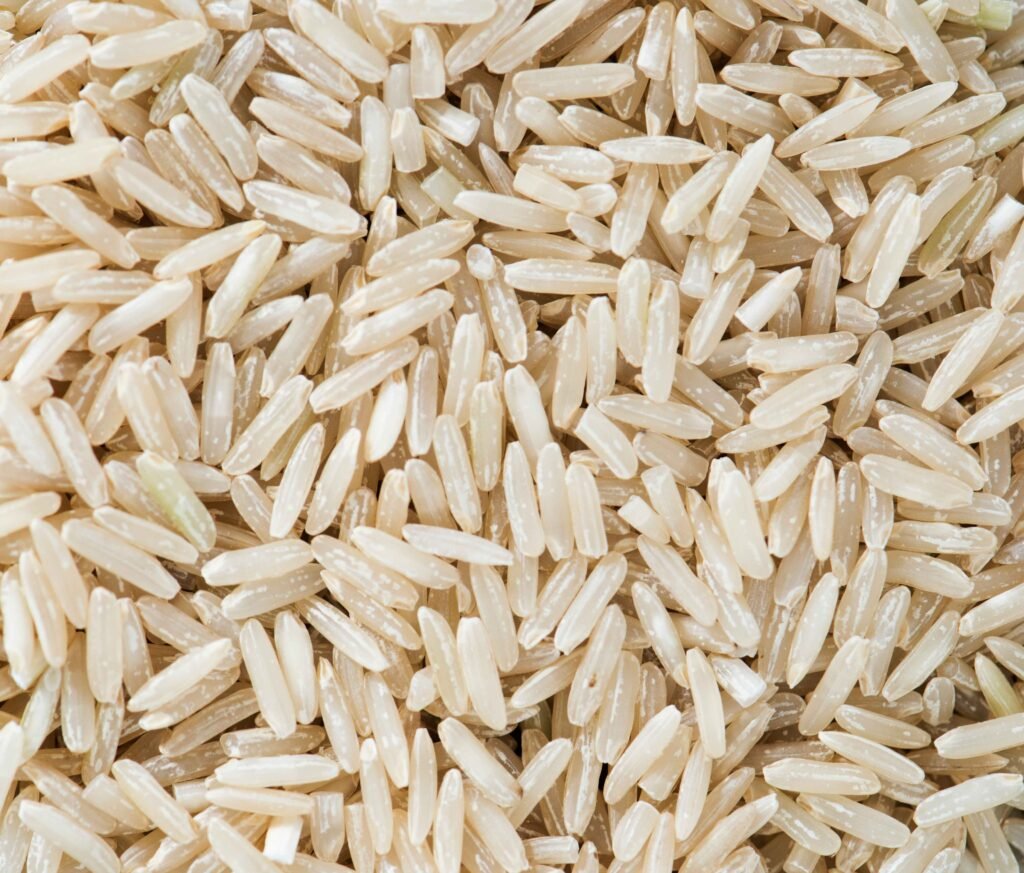
In simple words, it is a seed of a rice plant. A rice grain is the seed of the rice plant. For example, cereal grains like corn, rice, and wheat belong to the grass family. Every type is based on multiple layers, including hull (husk), bran layer, Germ and Endosperm. Some steps or methods are applied on these layers, like husk is protected cover that is removed in the milling process. The outer layer is rich in minerals, vitamins, and Fiber. The germ has nutrients and healthy fats. The main portion of grains has carbohydrates.
Types of Rice Grain
Rice grain is available in 3 categories: long, short grain, and medium grain. Rice grains are categorized based on their size, texture, aroma, and processing method. The three main types based on grain length are:
Key Classifications & Varieties
- Long-Grain: Slender-3 to 4 times longer and wide. You can say it is high amylose, which means it remains fluffy and separate after cooking.
- Medium-Grain: More tender, sticky, wider but shorter than medium grain.
- Short-Grain: Round in shape, very sticky, and plump.
Other varieties are brown rice, red rice, wild rice, and black rice.
Brown Rice vs. White Rice
Brown rice variety is healthier than white rice, it has magnesium, more Fibre and other nutrients. Its glyceric index is lower then than that of brown rice and good for blood sugar. White rice is faster cooking, enriched with nutrients, and processed. Brown rice is rich in Fiber.
Nutritional Value of Rice Grain
Rice grain is primarily a source of carbohydrates, which provide energy for the body. It also contains:
- Small amounts of protein
- Minimal fat
- Essential vitamins such as B vitamins
- Minerals like magnesium and iron (especially in brown rice)
How Rice Is Grown
Rice cultivation is unique compared to other grains. It is typically grown in flooded fields known as paddies. The water helps control weeds and pests while providing the ideal environment for growth.
The main stages of rice production include:
- Land preparation
- Seeds
- Irrigation and growth
- Harvesting
- Milling and processing
Economic & Cultural Importance of Rice
It is a major part of agricultural commodity it means it is not only a staple food. It supports thousands of farmers, and local people contribute to the economy of producing countries. It is exported to worldwide destinations from Pakistan in bulk. In many countries, it is part of the daily lunch.
Uses and purpose
- Rice bran oil is extracted from the bran layer.
- Rice husk is used as fuel or animal feed.
- Rice flour is used in baking and gluten-free products.
- Broken rice is used in processed foods and brewing.
Problems & Challenges in production
- Climate change is affecting rainfall patterns
- Water scarcity
- Pest and disease outbreaks
- Rising production costs

Muhammad Arif CEO, MBA in Finance and Marketing from South Korea University. Result-driven Chief Executive Officer with over 15 years experience leading and increasing growth in businesses. Starting from the scratch, launching and leading increasing in revenue in the three businesses in animal feed and food exports, and renewable energy in Pakistan. Particularly, having plentiful experience on East Asia and Middle East markets, and working with multinational organizations including the UN.