


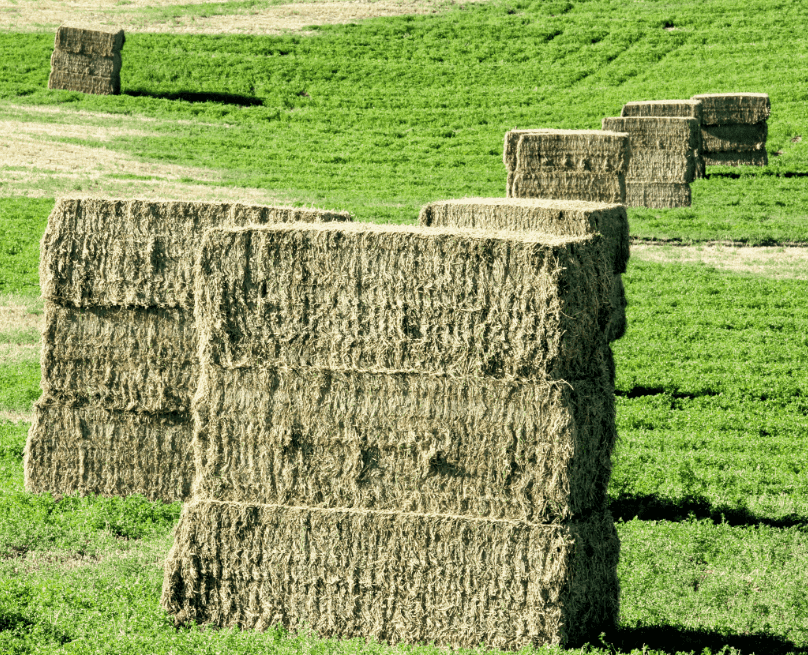
Rhodes grass hay is one of the most popular crops grown for dairy animals in different parts of the world. Farmers choose it due to good nutritional value, fast growth, drought tolerance, and high yield per acre. if you are growing hay for horses, goats, sheep, cattle, or for export purposes, then Rhodes grass hay is vital for profitability and planning. In this post, we’ll explain how much Rhodes grass hay you want to use per acre, major factors, and how you can increase production.
What Is Rhodes Grass Hay?
Rhodes grass (Chloris gayana) is a grown in the summer season for grazing and hay. It performs well in both tropical and subtropical climates. It is cultivated in all parts of the Middle East, Australia, Pakistan, and Africa.
This grass is valued because it grows quickly, tolerates drought, survives repeated cutting, and produces good-quality hay.
Average Rhodes Grass Hay Yield Per Acre
Average Rhodes grass hay is about 3-4 tons/acre in Pakistan; however, it can reach 10-16 tons dry matter hay with good irrigation, multiple cuts, and good management, and 150 to 300 bales per acre.
The yield of Rhodes grass hay per acre depends on soil quality, climate, irrigation, and practical management. On average:
- Dry hay yield per acre (annually): 6 to 10 tons per acre
- Per cutting yield:1.5 to 3 tons per acre
- Number of cuttings per year:3 to 6 cuttings
Yield in Different Conditions
1- Rainfed Areas
In areas dependent only on rainfall, where yield is 4-6 tons per acre annually, but cutting is twice or thrice in a year.
2- Irrigated Areas
With proper irrigation yield is 8-12 tons per year multiple cuttings in a year.
3- Poor Soil or Low Management
If soil fertility is low or management is poor, then yield can drop to 3-4 tons per acre.
Factors Affecting Rhodes Grass Hay Yield Per Acre
1- Climate
Rhodes grass grows best in summer, or you can say in warm temperatures (25–35°C) because it requires high sunlight, and a frost-free environment.
2- Soil Quality
Best soils for high production or yield are loam soil with a pH in the range of 5.5 -7.5as poor drainage can reduce production.
3- Seed Rate and Variety
Plant density is improved due to high-quality certified seed, and its rate is 3 to 5 kg per acre. Its improved variety can produce higher hay output and thicker stands.
4- Irrigation Management
Water plays a major role in yield as the first irrigation is critical after sowing, regular irrigation is good for growth and avoid waterlogging.
5- Fertilizer Application
Recommended nutrients:
- Nitrogen (N): Boosts leaf growth
- Phosphorus (P): Strengthens roots
- Potassium (K): Improves drought resistance
6- Cutting Time
Harvest time affects quality and yield.
- First cut: 60–70 days after sowing
- Next cuts: Every 30–40 days
Annual Yield Breakdown Per Acre
Cutting Number Average Yield (Tons/Acre)
1st Cutting 2.5 – 3.0
2nd Cutting 2.0 – 2.5
3rd Cutting 1.5 – 2.0
4th Cutting 1.5 – 2.0
Total Annual Yield 7 – 10 Tons
Steps to Increase Rhodes Grass Hay Yield Per Acre
1- Land Preparation
- Deep ploughing improves root development
- Level land helps even water distribution
2- Timely Irrigation
- Light but frequent irrigation is better than heavy watering
- Avoid drought stress during early growth
3- Use Nitrogen Fertilizer
- Apply nitrogen after each cutting
- This increases leaf growth and green matter
4- Weed Control
Weeds compete for nutrients and water.
- Control weeds in early stages
- Clean fields improve yield by 15–20%
5- Proper Harvesting
- Cut at early flowering stage
- Avoid cutting too close to the ground
- Leave stubble for quick regrowth
Rhodes Grass Hay Yield vs Other Forage Crops
Crop Average Yield (Tons/Acre)
- Rhodes Grass 6 – 10
- Alfalfa 5 – 8
- Bermuda Grass 4 – 7
- Sudan Grass 4 – 6
Rhodes grass offers better yield stability in hot and dry conditions.
Economic Benefits of High Yield
It means lower cost/ton of hay, more export quality hay, higher farm profit, and better dairy animal farming. Farmers grow it specially for the export market or commercial hat production. Rhodes grass is a reliable and profitable feed crop. Farmers expect 6-10 tons of hay per acre annually with good fertilizers and an irrigation system.

Muhammad Arif CEO, MBA in Finance and Marketing from South Korea University. Result-driven Chief Executive Officer with over 15 years experience leading and increasing growth in businesses. Starting from the scratch, launching and leading increasing in revenue in the three businesses in animal feed and food exports, and renewable energy in Pakistan. Particularly, having plentiful experience on East Asia and Middle East markets, and working with multinational organizations including the UN.